Reimagine Your Patio Privacy: Beautiful Tall-Potted Plants That Shield and Impress
Reimagine Your Patio Privacy: Beautiful Tall-Potted Plants That Shield and Impress
You want privacy without the prison-yard vibe. Colour, scent, and style without the faff. And--crucially--something that actually works on a windy patio or city balcony. This is where tall-potted plants come into their own. They don't just create an instant green screen; they soften noise, guide the eye, and make your outdoor space feel like it belongs in a quietly luxurious boutique hotel. To be fair, it's kind of magical how a few well-chosen planters can transform a space in a single afternoon.
In this long-form guide, we'll help you reimagine your patio privacy with a curated shortlist of tall-container plants, complete layouts that really shield and impress, and practical, tested advice from UK conditions (rainy Tuesdays included). We'll cover structure, soil, sizes, maintenance, budgets, and--because it matters--UK rules and safety. If you've ever wondered, "Can a few pots really make my neighbours disappear?" The answer is yes. And better than you think.
Table of Contents
- Why This Topic Matters
- Key Benefits
- Step-by-Step Guidance
- Expert Tips
- Common Mistakes to Avoid
- Case Study or Real-World Example
- Tools, Resources & Recommendations
- Law, Compliance or Industry Standards (UK-focused)
- Checklist
- Conclusion with CTA
- FAQ
Why This Topic Matters
Outdoor privacy has become a quality-of-life essential. With more of us working from home, patios and balconies aren't just summer extras--they're extensions of our living room. That said, permanent screens or high fences can be expensive, heavy, or downright restricted by UK planning rules. Tall-potted plants are the elegant workaround, offering a living screen that's seasonal, flexible, and surprisingly effective.
There's also the human side. After a long day, you step outside with a cuppa. Instead of staring at bins or windows across the way, you see glossy leaves, hear a gentle rustle, and catch the sweet scent of jasmine drifting by. It's a tiny reset for the nervous system. Clean, clear, calm. That's the goal.
On a practical note, Reimagine Your Patio Privacy: Beautiful Tall-Potted Plants That Shield and Impress isn't just a mood board phrase; it's a strategy. Plant choice, pot height, weight, wind exposure, and layout all decide whether your "green wall" works... or flops by August. We'll steer you to the former.
Key Benefits
When designed with intention, tall container plantings deliver multiple wins at once.
- Immediate screening: Taller specimens (1.5-3 m) in 50-90 cm high planters can block lines of sight fast--no builders required.
- Flexible and reversible: Unlike fixed fences, planters move with you or the season. Change the layout on a Saturday morning--job done.
- Acoustic softening: Dense leaves and grasses gently scatter high-frequency noise. It won't silence the world, but it helps.
- Aesthetic value: Seasonal flowers, evergreen structure, and texture layering make small patios feel considered and curated.
- Wildlife support: Nectar-rich climbers (e.g., Trachelospermum jasminoides) and grasses draw pollinators even in urban pockets.
- Microclimate improvement: Plants cool hot patios through transpiration and shade--especially valuable on south-facing terraces.
- Compliance-friendly privacy: Where fences may be height-limited, movable planters provide screening without permanent works.
Quick micro-moment: A client in Battersea once told me their morning coffee "tastes better" since the planters went in. The view changed, and so did the mood. Simple--yet it sticks.
Step-by-Step Guidance
This is the part where your plan turns practical. Follow these steps to create a tall, beautiful, durable privacy screen--without the guesswork.
1) Audit Your Space
- Measure: Note patio dimensions and the exact height you need to obscure (e.g., neighbours' sightlines at 1.6-1.8 m).
- Sun/wind: South and west aspects roast; balconies funnel wind. North and east stay cooler and shadier.
- Weight load: Ground-level patios tolerate more. Balconies/roof terraces require structural load checks (more in the compliance section).
- Water access: A nearby tap? Great. Otherwise plan self-watering containers or drip irrigation.
Ever tried screening a view and ended up with plants that barely graze your waist? Measure first. You'll save money and your patience.
2) Choose the Right Plants (UK-tested)
The best tall-potted plants for privacy unite height, density, and container tolerance. Here are proven options for UK patios and balconies:
- Clumping bamboo (Fargesia robusta, F. rufa, F. nitida): Elegant canes, dense leafage, non-running habit. Ideal for evergreen screens. Aim for 40-60 litre pots minimum.
- Star jasmine (Trachelospermum jasminoides): Evergreen climber with summer scent; thrives on trellis in pots. Great for vertical screens without bulk.
- Portuguese laurel (Prunus lusitanica) in planters: Glossy leaves, prune-friendly, evergreen structure. Holds shape nicely.
- Bay laurel (Laurus nobilis): Edible leaves, formal look, evergreen. Standards or multi-stems lend height.
- Olive (Olea europaea): Silvery foliage, Mediterranean vibe. Less dense but superb for filtering views; combine with grasses.
- Trachycarpus fortunei (windmill palm): Hardy palm giving lofty screening and movement. Underplant to fill gaps.
- Magnolia grandiflora 'Little Gem': Compact evergreen magnolia with giant, scented flowers. A statement in large planters.
- Italian cypress (Cupressus sempervirens 'Pyramidalis'): Tall architectural pillars in big, stable containers. Use sparingly as accents.
- Miscanthus sinensis & Calamagrostis x acutiflora 'Karl Foerster': Tall grasses that sway and blur sightlines--beautiful in sun.
- Hydrangea paniculata (tree form): Flower-laden standards give summer drama; deciduous, so pair with evergreens.
- Eleagnus ebbingei: Tough, salt-tolerant evergreen with silvery leaves; clips beautifully.
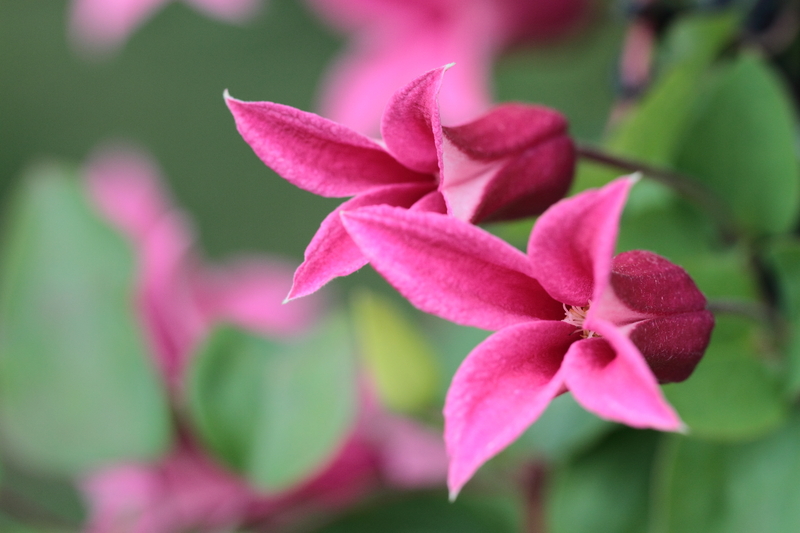
- Clematis armandii (evergreen clematis): Spring-scented climber for trellis; prefers some shelter.
Note on bamboo: Choose clumping species (Fargesia) over running types (many Phyllostachys) to avoid spread. Even in pots, running bamboos can be too vigorous. Trust us on this one.
3) Select Containers That Do the Heavy Lifting
Container choice is half your privacy strategy. Taller planters lift the "screen line" to where you need it.
- Size: For tall plants, go minimum 40-50 cm diameter and depth. Large bamboos or shrubs do best in 60-80 cm diameter with 60+ litres of soil volume.
- Material: Fibreglass/fiberstone (light, strong), corten steel (striking but heavy), high-quality resin (durable), or pressure-treated wood. Terracotta is beautiful but heavy and can crack in frost--use frost-proof if you love it.
- Weight & stability: Wide bases prevent tip-over in gusts. For balconies, consider planters with anchor points or discreet guying to railings.
- Drainage: Essential. Look for pre-drilled bases and use pot feet to keep planters off the paving. Add a saucer if needed to protect surfaces--don't let roots sit in stagnant water.
Pro tip moment: Add 2-5 cm of horticultural grit at the base to prevent drainage holes clogging. It's boring but it works.
4) Use the Right Soil Mix and Nutrition
- Soil: For long-term container health, use a loam-based compost (John Innes No. 3) mixed with 20-30% horticultural grit for drainage. For lightweight installs, mix with peat-free multi-purpose like Melcourt SylvaGrow.
- Fertiliser: Slow-release granular feed in spring. Top-up with liquid seaweed or balanced feed monthly from April-August.
- Mulch: 3-5 cm composted bark or cocoa shells to conserve moisture and tidy the look. Smells nice after rain, too.
5) Design the Layout for Real Privacy
Think in layers and sightlines, not just "stick a pot here." Stand where you need privacy most (at your seating height) and map the angles.
- Create a backbone with 2-4 tall evergreens or bamboos in matching planters.
- Fill the gaps using trellis-trained climbers (star jasmine) to knit the screen together.
- Add movement with tall grasses in slightly lower planters at the edges. It softens the look and breaks wind.
- Underplant for texture: trailing thyme, heuchera, evergreen ferns depending on light.
One client layered a 1.8 m Portuguese laurel, a jasmine trellis, and a 1.2 m miscanthus run along a terrace edge. The result? A lush "green wall" that felt like a small private courtyard in Lisbon. Honestly, it surprised even us.
6) Irrigate Wisely
- Self-watering planters save time. Look for capillary wicks and water-level gauges.
- Drip irrigation on a timer is gold--especially in heatwaves. Use 2-4 L/h emitters and water early morning.
- Watering rhythm: In UK summers, large planters may need watering 2-4 times weekly; daily in hot spells for thirsty species.
Ever walked outside after a long, hot Friday to drooping bamboo? Get the timer. You'll thank yourself.
7) Maintenance: Gentle but Consistent
- Pruning: Clip laurel or eleagnus lightly 2-3 times a year for density. Trim bamboo culm tips to shape. Cut grasses to 10-15 cm in late winter.
- Feeding: Slow-release in spring; liquid feed monthly in the growing season.
- Winter care: Wrap pots in severe cold (hessian or bubble wrap), raise on feet, and avoid waterlogging.
- Re-potting: Every 3-5 years for shrubs/trees; divide grasses every 3 years for vigour.
8) Budgeting and Phasing
You don't need to do it all at once. Prioritise key sightlines first, then layer in accents.
- Entry budget (?350-?800): A trio of quality planters with star jasmine and tall grasses + compost + trellis.
- Mid-tier (?800-?2,000): Add 2-3 large bamboos or laurels in 60-80 L planters for an instant backbone.
- Premium (?2,000+): Custom fibreglass troughs, irrigation timer, mature specimens (e.g., multi-stem magnolia or bay standards).
Truth be told, the biggest win-per-pound often comes from matching planters and a single species repeated. It looks calm--and expensive--in the best way.
Expert Tips
- Blend heights: Use 50-80 cm tall planters topped with 1.5-2.5 m plants to get immediate screening at seated eye level.
- Stagger your line: A slight zigzag creates depth, reduces wind tunnelling, and looks more natural than a straight militaristic row.
- Mind the wind: In exposed sites, choose flexible plants (grasses, bamboo) and avoid sail-like canopies. Anchor planters discretely.
- Scent layers: Star jasmine for summer, sarcococca for winter perfume near the door. You'll notice it every time you step out.
- Lighting: Low-voltage uplights transform evening privacy planting into a feature. Warm white (2700-3000K) is relaxing.
- Contrast textures: Glossy laurel with airy grasses; bold magnolia with fine jasmine foliage. Contrast makes screens feel designed.
- Choose clumpers over runners for bamboo; easier in pots and less drama later.
- Test the view: Sit down. Always. Standing gives a false sense of cover; you live seated on a patio.
Quick aside: it was raining hard outside that day we installed a jasmine trellis in Stoke Newington. The scent, after an hour, somehow made the drizzle feel... cinematic. Plants do that.
Common Mistakes to Avoid
- Under-potting tall plants: Too-small containers dry out fast, topple, and stunt growth. Go bigger than you think you need.
- Ignoring drainage: Waterlogged roots = sad plants. Drill holes if needed and add pot feet.
- Wrong species for aspect: Sun-loving grasses in shade will sulk; shade-tolerant laurels can scorch in full afternoon sun without water.
- Single-season thinking: Pair deciduous stunners (hydrangeas) with evergreens for year-round cover.
- Skipping weight checks on balconies: Safety first. Wet compost is heavy--more on regs below.
- Buying cheap compost: Low-quality mixes break down, slumping roots and starving plants. Use loam-based, peat-free options with structure.
- Planting running bamboo in containers without containment plan. It will try to escape. Yeah, we've all been there.
Case Study or Real-World Example
Project: 4 m x 3 m first-floor terrace, East London (Hackney). Overlooked by two neighbouring windows; strong westerly winds; limited load allowance per the building management.
Brief: Reimagine Your Patio Privacy: Beautiful Tall-Potted Plants That Shield and Impress--within 48 hours, minimal structural impact, and a warm-modern look.
Plan:
- Three 80 cm x 30 cm x 70 cm fibreglass troughs along the west edge (each ~65 L).
- Core plants: Fargesia robusta (clumping bamboo) x 3, trimmed to 2.2 m; interplanted with Trachelospermum on slim trellises for scent.
- Flank planters: 50 cm cubes with Calamagrostis 'Karl Foerster' (two per planter) for movement and wind diffusion.
- Underplanting: Heuchera 'Obsidian' and trailing thyme for colour and ground cover.
- Irrigation: 4 L/h drip emitters on a battery timer, watering every 2 days in summer, weekly in winter if dry.
Outcome: Visual privacy at seated eye level achieved immediately. Wind load reduced via staggering. Summer jasmine fragrance elevated the evening vibe. The client messaged a week later: "Didn't expect it to feel this... private." That pause said a lot.
Costs (approx, inc. VAT): Planters ?650, plants ?780, compost/grit ?140, irrigation ?110, labour ?450. Total ?2,130. Not the cheapest; definitely impactful.
Tools, Resources & Recommendations
Here's a curated UK-focused list to make life easier.
Recommended Plant Sources
- RHS Plant Finder for varieties and suppliers: authoritative, up-to-date.
- The Palm Centre (London) for bamboo, palms, and specimen shrubs.
- Architectural Plants for statement evergreens and trained forms.
- Local independent nurseries often have climate-appropriate stock and advice--worth the trip.
Planters & Accessories
- Elho and Lechuza for lightweight, self-watering containers.
- Fibreglass/fiberstone troughs from specialist suppliers--lightweight yet sturdy.
- Hozelock for user-friendly drip kits and timers.
- Pot feet and stainless steel trellises to keep planters dry and vertical growth elegant.
Soil & Fertilisers
- John Innes No. 3 for long-term container structure.
- Melcourt SylvaGrow (peat-free) for quality, sustainable blends.
- Slow-release fertiliser and liquid seaweed for steady nutrition.
Reference Standards & Learning
- RHS (Royal Horticultural Society) guides on container gardening and pruning.
- BS 3936 Nursery stock standards for plant quality.
- BS 3998 Tree work recommendations--relevant if you're pruning larger specimens.
Law, Compliance or Industry Standards (UK-focused if applicable)
Plant privacy is wonderfully flexible, but there are still rules and good practice to respect--especially on balconies and shared buildings.
- Planning rules for fences/walls: In many UK areas, structures over 2 m may require permission; front garden boundaries are often limited to 1 m. Containers are typically considered movable, but check local guidance.
- High hedges: Under Part 8 of the Anti-social Behaviour Act 2003, evergreen hedges that adversely affect neighbours can lead to council involvement. Keep heights reasonable and relationships friendly.
- Right to light: A civil matter in England & Wales under common law and the Prescription Act 1832. Be considerate--avoid blocking long-established windows with semi-permanent installations.
- Balcony loads: Many residential balconies are designed for around 2.5 kN/m? (guidance varies). Wet compost is heavy--60 L can exceed 60 kg with plant and pot. Confirm with your building management or a structural engineer.
- Drainage run-off: Don't allow overflow to drip onto neighbours or public areas. Use saucers or controlled drainage.
- Invasive species: The Wildlife and Countryside Act 1981 restricts certain invasive plants (e.g., Japanese knotweed). Bamboo isn't listed, but running types can be nuisance--use clumping species and responsible containment.
- Pesticides & biocides: Follow UK label laws and use Integrated Pest Management first: hand removal, biological controls, and horticultural soaps.
- Tree Preservation Orders (TPOs): If you're pruning a protected tree, permissions may apply--even in a pot. Check with your council.
If you're in a leasehold flat, also review covenants about external fixtures and the building's facade. It's dull, but it avoids awkward emails later.
Checklist
- Measure heights to screen at seated eye level (around 1.2-1.5 m from your seat).
- Choose aspect-appropriate plants: sun vs shade, wind vs shelter.
- Pick large, stable planters (40-80 L+) with excellent drainage.
- Use a loam-based, peat-free mix with added grit for structure.
- Stagger plant positions; blend evergreens, climbers, and grasses.
- Install drip irrigation or choose self-watering planters.
- Mulch, feed in spring, trim for density 2-3 times a year.
- Check balcony load and building rules before installing.
- Plan for winter protection and re-potting every 3-5 years.
- Step back, sit down, and test your sightlines--adjust as needed.
Conclusion with CTA
Privacy doesn't have to be blunt. With thoughtful, tall-potted plants, you can shape sightlines, hush the hustle, and turn a plain patio into a place you actually crave at the end of the day. Reimagine Your Patio Privacy: Beautiful Tall-Potted Plants That Shield and Impress isn't a slogan; it's a calm, green, good-life strategy.
Start with three planters, pick one evergreen backbone, and layer in scent and movement. In our experience, you'll notice the shift on day one. And yes, your morning coffee might taste better.
Get a free quote today and see how much you can save.
Here's to a private corner outside where the world feels softer--and a little more yours.
FAQ
What are the best tall-potted plants for privacy in the UK?
Top performers include clumping bamboo (Fargesia), Portuguese laurel, star jasmine on trellis, Eleagnus ebbingei, bay laurel, windmill palm, Italian cypress (in big, stable pots), evergreen magnolia 'Little Gem', and tall grasses like Calamagrostis and Miscanthus for movement and blur.
How big should the pots be for tall privacy plants?
Go for at least 40-50 cm diameter and depth; 60-80 L soil volume is ideal for bamboos and shrubs. Larger volumes mean better moisture retention, stability, and long-term health.
Are bamboos legal and safe to use for patio privacy?
Yes. Choose clumping types (Fargesia) rather than running bamboo (many Phyllostachys), which can become invasive. In pots, clumpers are easier to control and still form dense screens.
Will tall-potted plants blow over on a windy balcony?
Use wide-based planters, heavier materials, and avoid big sail-like canopies. Stagger the layout, anchor discreetly if permitted, and consider flexible species (grasses, bamboo). Always confirm balcony load limits.
How much privacy can I realistically expect?
With 70 cm-high planters and 1.8-2.2 m plants, you can typically block direct lines of sight at seated height. Complete blackout is rare, but you'll achieve a soft, natural screen that feels private and welcoming.
What plants work for shady patios?
Portuguese laurel, bay laurel, Eleagnus, Sarcococca (for winter scent), and evergreen ferns. For climbers, consider Trachelospermum (needs some light) or ivy cultivars where appropriate. Grasses prefer sun, though some carex can cope with shade.
How do I water when I'm away?
Install a simple drip irrigation system with a timer or use self-watering containers. In hot spells, set the timer for early morning watering every 1-2 days, adjusting for rainfall.
What's the maintenance like?
Light pruning 2-3 times a year to keep density, feeding in spring, mulching, and occasional pest checks. Grasses are cut back in late winter. Re-pot every 3-5 years to refresh soil and root space.
Will this attract pests or cause mess?
Healthy plants grown in quality compost are less prone to pests. Sweep fallen leaves periodically. If issues arise, start with gentle IPM methods: hand removal, horticultural soap, biological controls.
Can I combine evergreens and flowering plants?
Absolutely. Use evergreens for the year-round screen and layer flowering climbers (jasmine, clematis armandii) or seasonal showstoppers (hydrangea standards) for colour and interest.
How fast will I get results?
Instantly, with mature specimens and tall planters. Bamboos and laurels give immediate coverage; climbers like jasmine knit in over one to two seasons.
Do I need planning permission for plant screens?
Generally no, because planters are movable. However, fixed trellis or screens attached to structures, or anything affecting building exteriors, may require consent--especially in flats or conservation areas. Always check local guidelines.
What about winter care?
Ensure good drainage, raise pots on feet, mulch the surface, and wrap containers in severe cold snaps. Hardy species like Fargesia and Trachycarpus cope well if roots aren't waterlogged.
How do I avoid damaging my balcony or neighbour relations?
Confirm structural loads, use saucers to prevent run-off, secure planters against tipping, and keep screens to reasonable heights. A friendly chat with neighbours goes a long way.
Which soil is best for long-term container health?
A loam-based mix (John Innes No. 3) blended with 20-30% grit provides drainage and structure. Supplement annually with compost and use slow-release fertiliser each spring.
Any budget-friendly approach that still looks premium?
Match your planters, repeat a single evergreen species for cohesion, and add one scented climber. Consistency reads as high-end design, even on a modest budget.